
AO Smith water heaters are built with advanced safety features that work seamlessly with expansion tanks to maintain stable pressure and protect your plumbing system. Known for their durability and energy-efficient performance, AO Smith heaters are designed to handle thermal expansion safely and effectively. With reliable engineering and long service life, they offer homeowners a worry-free hot water experience. Pairing an AO Smith heater with a properly sized expansion tank ensures maximum safety, efficiency, and performance.
When water is heated, it naturally expands and occupies more volume. And because water cannot be compressed the way air can, this expansion creates additional pressure inside your plumbing system. For example, water in a closed tank pressurized at 50 psi can jump to 250 psi with just a 10°F (5°C) increase in temperature. That’s a big pressure spike—and this is exactly why system designers must plan for thermal expansion.
Many homes today have “closed” plumbing systems. This is usually because:
- Check valves are installed at the water meter to stop contaminated water from flowing back into public supply lines. These are often mandatory by code and serve an important safety purpose.
- Pressure reducing valves (PRVs) are added to conserve water and extend the life of fixtures.
While these components are essential, they also limit the system’s ability to release excess pressure—making thermal expansion a common issue in modern water heating setups.
Effects of Thermal Expansion in Hot Water Systems
If the pressure created by expanding hot water isn’t controlled, several problems may arise:
- Dripping or running T&P valve:
Excess pressure often forces the temperature & pressure relief valve to leak or run continuously. - Damage to the water tank or pipes:
Too much pressure puts stress on the heater and the plumbing system, which can lead to leaks or even flooding. - Premature failure of rubber components:
High pressure can cause any rubber parts in the system to wear out faster, including:- Water fixture gaskets
- Dishwasher and washing machine pumps
- Ice maker components and water lines
- Toilet flush valves and seals
These issues may seem small at first but can lead to costly repairs over time.
Solution: Install a Properly Sized Expansion Tank
A well-sized expansion tank is the simplest and most effective way to manage thermal expansion. It provides a safe space for the extra water volume to go when the water heater warms up.
When the heating cycle ends—or when a tap is opened—the pressure reduces, and the stored water flows back from the expansion tank into the plumbing system. This keeps pressure stable and prevents unnecessary stress on your pipes and fixtures.
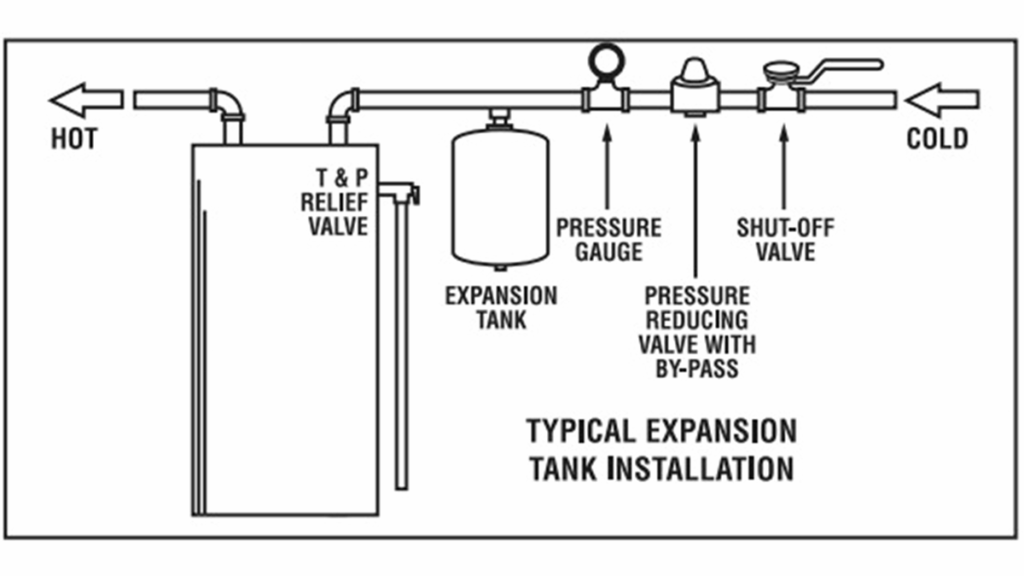
How an Expansion Tank Works
An expansion tank is designed with a rubber bladder inside that separates the tank into two parts—one filled with air and the other meant to hold excess water. When the water in your heater warms up and expands, the extra volume naturally pushes into the expansion tank. The air side compresses gently to make room for this water, which helps keep the overall pressure in your plumbing system balanced and safe. This simple setup prevents sudden spikes in pressure and protects your water heater and pipelines from unnecessary strain.
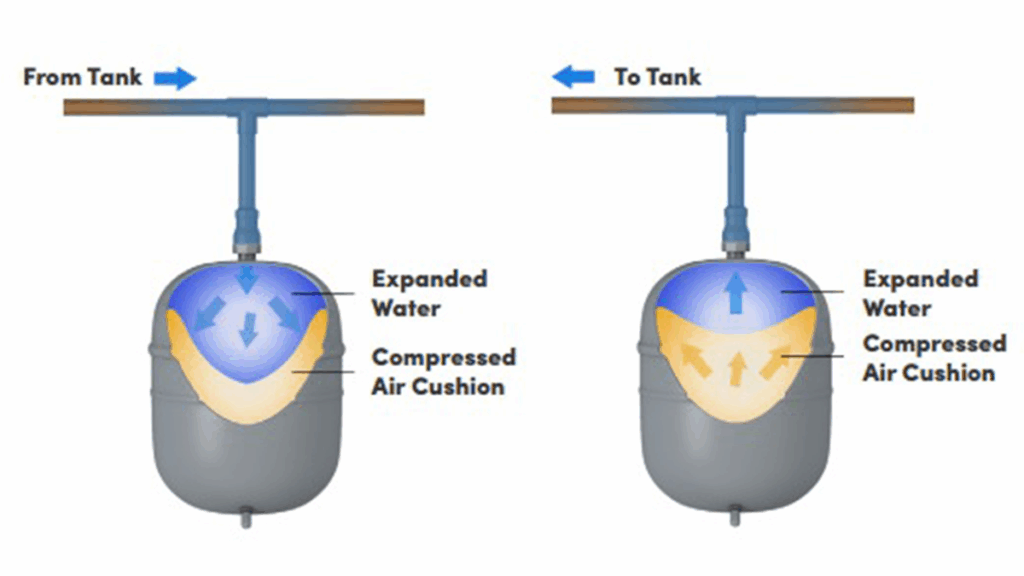
Why Every Water Heater Should Have an Expansion Tank
Having an expansion tank installed makes a noticeable difference in the long-term health of your plumbing system. Without it, the pressure created by expanding hot water has nowhere to go, which can slowly damage pipes, fixtures, and even the water heater itself. By absorbing these pressure changes, the expansion tank reduces stress on the system and helps the water heater operate smoothly and last longer. It also keeps your water pressure steady, preventing those sudden bursts that sometimes occur when pressure builds up in the lines. In many areas, expansion tanks are even required by building codes because of how effectively they enhance safety and performance, making them a smart and essential addition to any modern water heating setup.
Where Should an Expansion Tank Be Installed?
Expansion tanks are typically installed on the cold-water supply line, usually near the water heater. However, they can be placed anywhere along the cold line—as long as there are no shut-off valves between the tank and the heater. This ensures the system can freely absorb expansion and relieve pressure as intended.